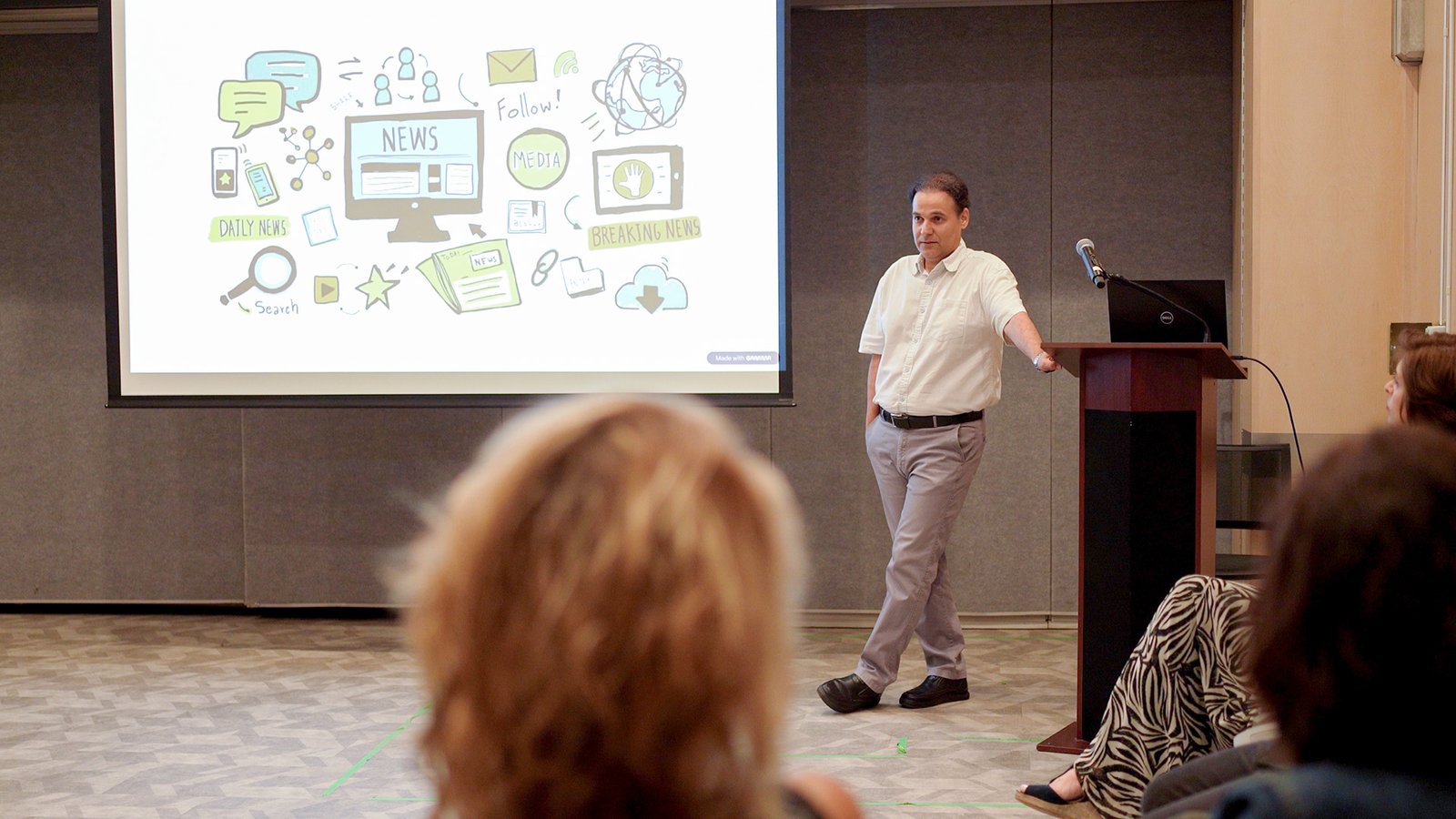
Following the introduction of Auravista’s vision in the first gathering, the second session shifted the conversation from why the movement exists to how meaningful change actually begins.
Centered around the question “What Can We Do?”, the evening explored one of the most common feelings shared by people who care deeply about the world: the belief that individual actions are too small to matter.
Rather than offering idealistic answers, the discussion challenged that assumption. Participants reflected on the tendency to wait for the “perfect opportunity,” the “right leader,” or a large-scale solution before taking action. The gathering proposed a different perspective: meaningful change is rarely the result of extraordinary moments. It is built through ordinary people making consistent choices within their own communities.
Founder Mozhgan Mahmoodian emphasized that hope becomes meaningful only when it is accompanied by action. A better future is not something we passively wish for; it is something we actively shape through our daily decisions, relationships, and willingness to contribute.
A central theme of the evening was the difference between admiring change and participating in it. Many people are inspired by stories of transformation, yet hesitate to believe they can become part of those stories themselves. The gathering encouraged participants to reconsider this mindset and recognize that every movement is ultimately built by individuals who choose to take one small step before seeing the entire path.
The discussion also explored the psychological barriers that prevent people from acting. Feelings of isolation, perfectionism, and the belief that one person cannot make a difference often lead to inaction. Participants reflected on how these narratives can be replaced with a more realistic understanding of collective impact, where meaningful change emerges from many small contributions rather than a few heroic acts.
Throughout the evening, practical examples of community-based action were shared, illustrating how creativity, education, dialogue, volunteering, and everyday acts of kindness can become meaningful forms of participation. The focus was not on changing the entire world overnight, but on creating environments where positive action becomes contagious and inspires others to contribute in their own way. This philosophy closely reflects Auravista’s emphasis on turning hope into action through community, connection, and purposeful participation.
The second Auravista Gathering concluded with a simple but enduring message:
Real change does not begin when the world becomes ready.
It begins when ordinary people stop asking “Who will do something?” and instead begin asking “What can I do today?”